Peru and Freedom (and Food) Day 3
 Ancient Cusco
Day Two: http://drrimatruthreports.com/?p=25600
Day Three: http://drrimatruthreports.com/?p=25617
Day Four: http://drrimatruthreports.com/?p=25641
This morning Hubert arrived at the hotel to take us south from Cusco, Peru’s ancient capital.
.
We had already had our cocoa tea so our altitude experience was, at least, under control and we were ready to roll.
.
Off we went for about an hour and a quarter to a tiny village built on a really precipitous hillside.
.
I was pretty sure our car would roll backwards and tumble end to end down the thousands of feet of empty space.
.
I was wrong.
.
Thank God Jaimie was driving.
.
It looks very much like only his magical powers kept us alive. I could be wrong
.
There are many collectives of women weavers in this village. As we made our perilous ascent I wondered why we were passing one after another.
.
I turns out the one we visited is the newest, least known and highest up the mountain.
.
The company which has arranged our trio, Adios Travel, has a policy of supporting new, indigenous and struggling enterprises.
.
This qualifies on all fronts since the 12 families who weave and teach weaving there are all full Quichua tribal people, Andeans, as they like to refer to themselves, not Indians.
.
Wearing their full skirted native dresses, amazing hats and bight jackets with spectacular braids like cornrows complete with heavy black beaded tassels showing that the are married, we had a lecture on shearing the alpacas, cleaning their wool with the “Inca Shampoo” made by laboriously grating and filtering the root of the agave plant and then adding water to allow scrubbing the filthy wool to a gleaming brightness.
.

.
Next the wool is spun into a double worsted thread using a simple tool found world wide called a drop needle.
.
All over this region we have seen women walking or carrying out other activities with their drop needles creating their yarn.
.
The natural colors from the cochineal beetle (carmine, orange, pink, depending on whether lemon juice, salt, water, etc., were added to the fine powder made from the tiny parasitic beetle of the prickly pear cactus) blue and purple from flowers and purple corn and so on.
.
Their demonstration was beautiful and so were they, proud and gentle at the same time.
.
Their wares, woven of baby Alpaca, adult alpaca and sheep wool were magnificent.
.
Much of it speaks the iconographic language of their people who, in ancient times had a high culture in the absence of alphabetic or glyphic writing.
.
Then on to the Inca Morey sinkhole.
.
Doesn’t sound too interesting, does it?
.
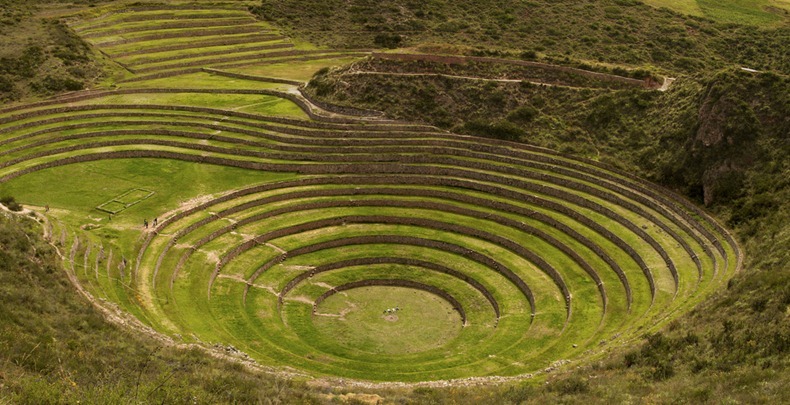
Well, what these engineering geniuses did was construct a series of magnificent concentric terraces and walls down the contour of this immense hole.
.
.
The main formation and the surrounding subsidiary ones had pipes to irrigate the terraces for adapting plants to higher elevations, making ceremonial offerings to Pachamama, Mother Earth and, movingly, bringing her water to a filter at the very bottom of the sinkhole because the Inca realized that the reason Pachamama created the sinkhole in the first place is that she was thirsty.
.
Thus, the offerings of gratitude and the water offered to Her are the services of grateful children.
.
This sinkhole is, of course, a center devoted to personal and crop fertility.
.
I am no sure I have ever seen a more moving testament to living in harmony with the earth.
.
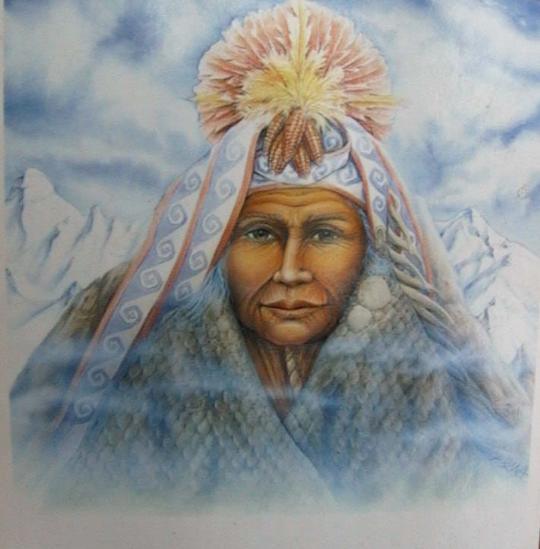 Every August 1st, Pachamama (Mother Life) is honored here.
.
I don’t know about you, but I would love to be here.
.
After the astonishing Moray Greenhouse experience, where these ingenious people selected corn that can grow at 11,000 feet without a single gene gun to damage the genetic integrity of any part of the ecosystem we went to see the Maras Salt ponds.
.
Like the Romans, the Inca paid wages in salt and, like them, they had salt mines.
.
These were worked not by slaves, however, but by Families.
.
The calcium chloride deposits are deep within a mountain washed over by a river.
.
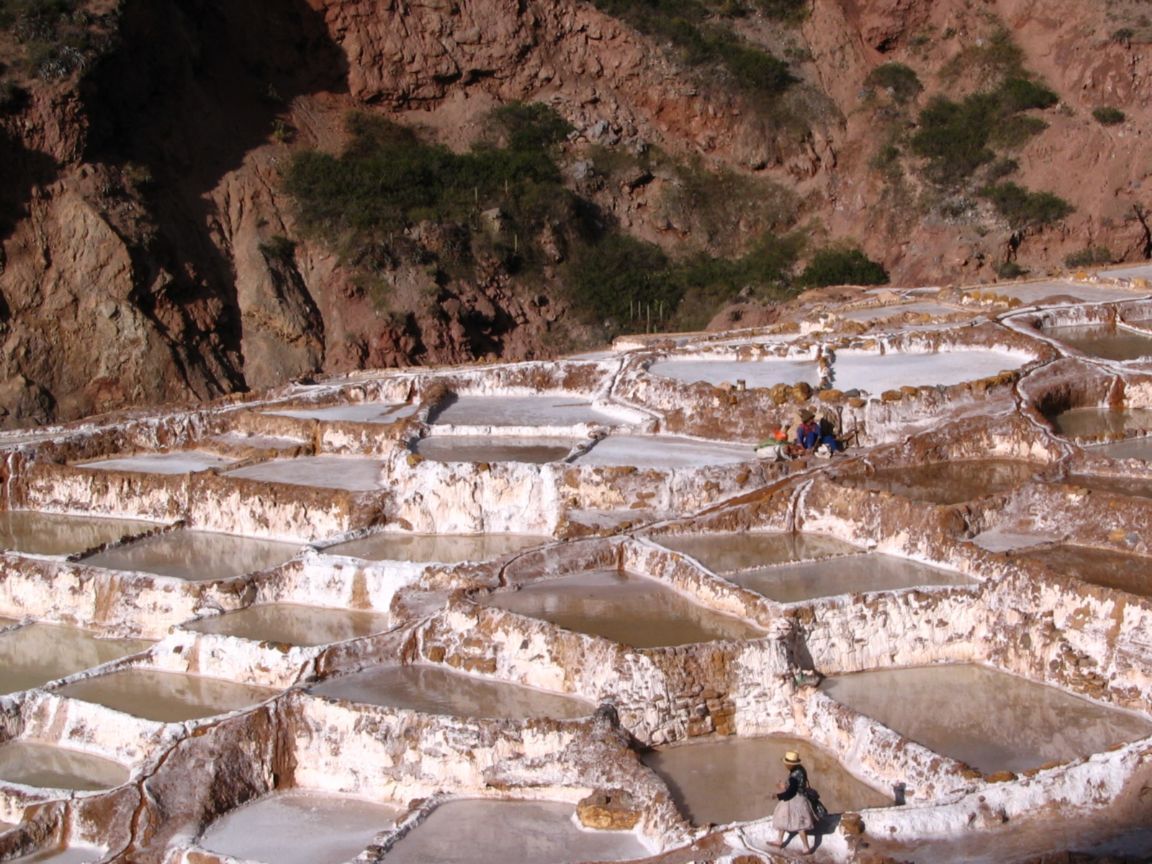
Thousands of stepped terraces hold the briny outflow so that the fierce sun can evaporate the small ponds.
.
.
Once harvested, the ponds are checked to make sure that at least 4 inches of water-impermeable clay lines the bottom of the terraces and then the sluces are opened to allow the briny mixture to fill the terraces again.
.
This marvel of creative engineering is in use to this day.
.
Downstream from the salt terraces, the river runs clear and life flourishes.
.
If it were not working, everything downstream would be as dead as the plains of Carthage after the Romans sowed them with salt.
.
I have visited those long-ago fertile fields, by the way and they are still dead.
.
So the Maras salt mines not only provide mineral rich salt, they protect the land for hundreds of miles.
.
OK.
.
Food.
.
Quinoa soup at the tiny family-run Uchucuta restaurant nevaude the one we were headed for had a large group go in just as we eere arriving.
.
No matter. There are more. This is Peru and, so far as ee know do far, they are all good.
.
I tried the protein-rich quinoa soup.
.
It alone is worth the trip to Ollantaytambo.
.
Dinner at El Auberge literally on the platform where our train leaves at 8:00 fo Aquas Caliente, the door to Machu Picchu.
.
Tac
U
Lar.
.
Alpaca filet with native berries.
.
Local lamb medallions with its own juices.
.
Red quinoa salad wirh apples and blue cheese.
.
All organic from their own farm next store.
.
Their Peruvian organic coffee is not as good as our Panamanian Organic ciffee, of course but disguised as Cappuccino it was prettu good.
.
And Chicha Mirado made with purple corn.
.
Incomparable Mmmmm!
.
Mach Pichu tomorrow.
.
Yours for health and freedom,
.
Dr. Rima


